
Visual search: a practical guide with a test.
Optimising for visual search means an image can be found, interpreted in context and connected to accurate page or product data. “Lens SEO” is neither a separate Google programme nor a guaranteed result format.
Which signals are documented?
Google states that it uses alt text, page content and computer vision algorithms to work out the subject of an image. A descriptive file name gives only a very light hint, while relevant context and a crawlable file have a clear function.
| Signal | Function | Limit |
|---|---|---|
| Alt text | An accessible description or the function of the image in its context | Not a field for a list of keywords |
| Surrounding text and caption | Help establish the subject and the role of the image | Do not repeat the same generic description everywhere |
| File name | Gives a light textual hint | Do not rename stable URLs without a plan |
| Product data | Connects price, availability and product identity | Must match the visible offer |
| Image quality | Allows detail to be examined and improves the experience | A large unoptimised file slows the page down |
| IPTC fields | Carry creator and licensing information with the file | Compression tools often strip them; check yours |
How do background and framing change the task?
The images below are original demonstration material produced for this guide. They show the same category of object but are not photographs of the exact same physical product, so they represent an educational A/B scenario rather than a scientifically controlled experiment.
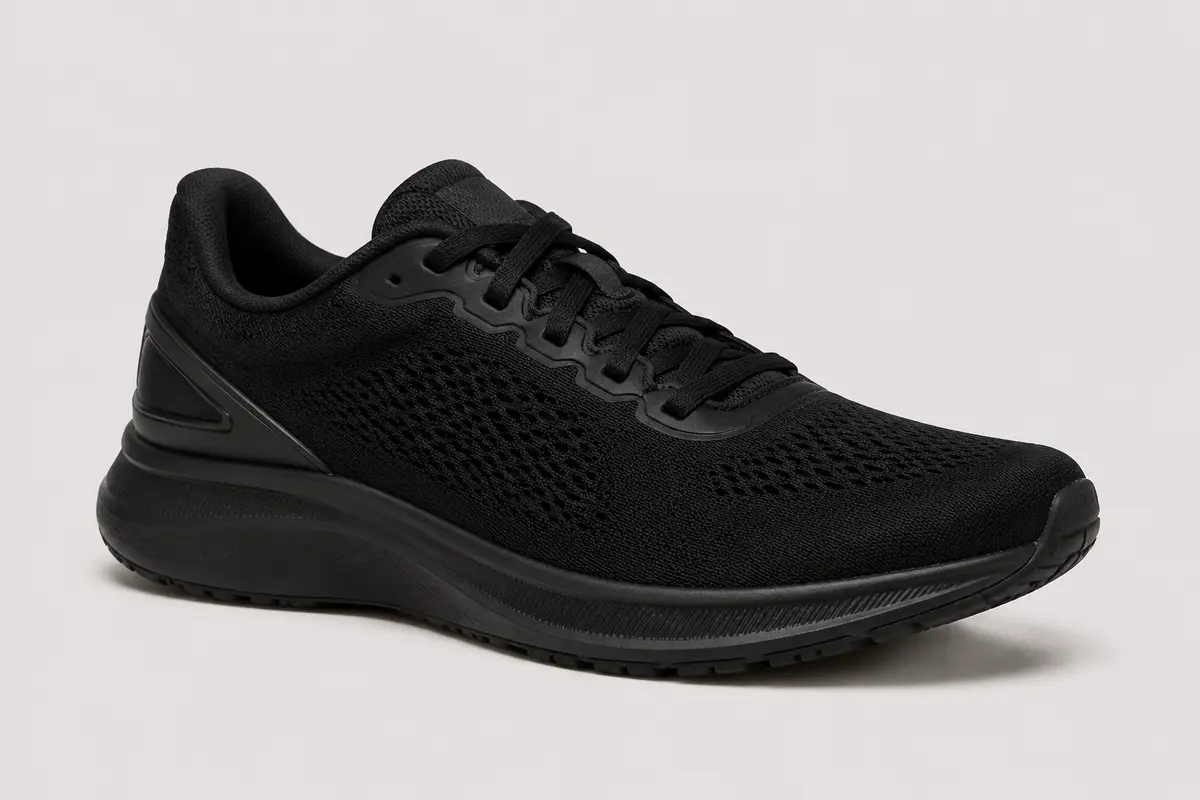
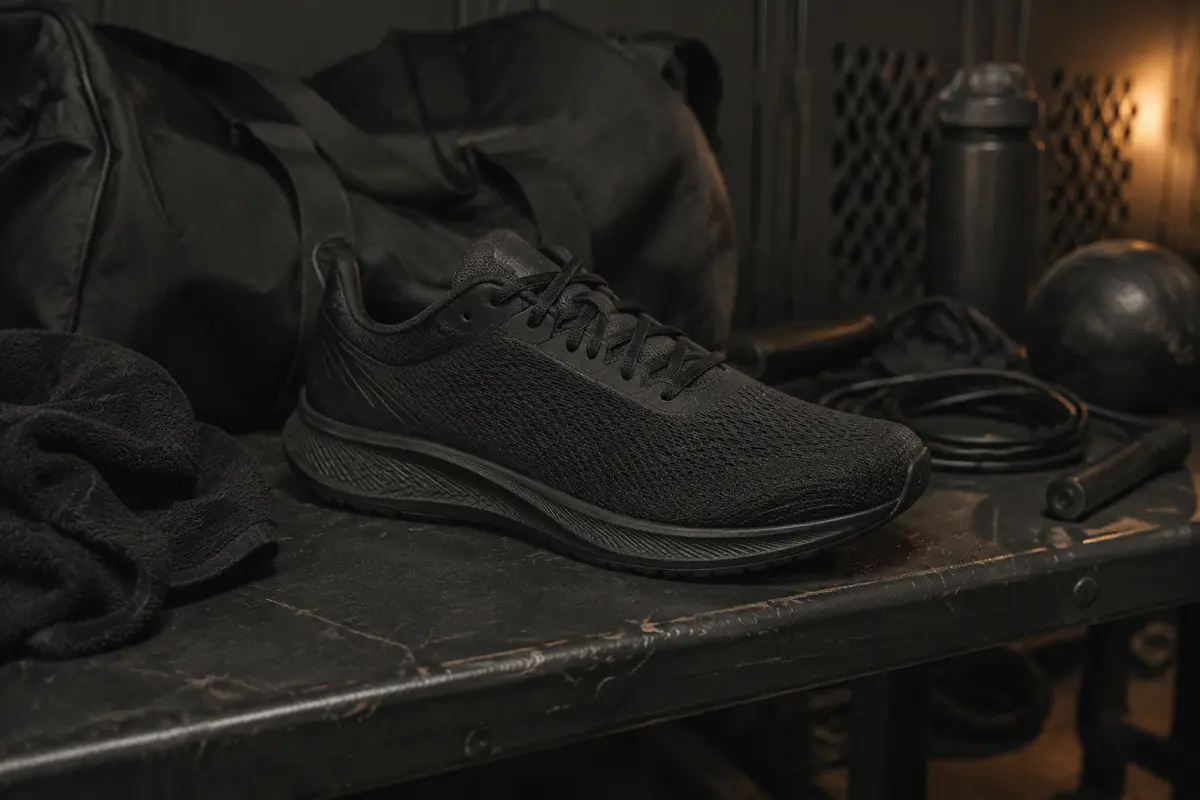
We do not conclude from this that A “always ranks better”. A catalogue may benefit from clean framing, while an editorial or lifestyle query may be better served by a contextual image. A real conclusion only emerges once both variants are published, indexed and tested against the same task.
How should the alt text be written for these two images?
Alt text depends on the function of the image on the page. Here the images serve a comparison, so the description must convey the difference between the variants. On a product page the same framing might require the model, the colour and the viewing angle.
| Context | Example |
|---|---|
| Informative photograph | A black running shoe isolated against a light studio background |
| Image repeating an adjacent caption | alt="" can be appropriate when the image adds no new information |
| Image used as a link to a product | Describe the destination or product the link opens |
| Complex chart | A short alt plus the full information in text or a table |
The W3C decision tree starts from whether the image carries meaning, contains text, has a function or is decorative. That is a more reliable process than applying a “brand + model + colour + material + use” formula to every image. The full decision tree is covered on the alt text page.
What technical implementation is required?
- A crawlable URL: the image must be reachable without a login or a block.
- A stable source: the same asset uses the same URL wherever practical, particularly behind a CDN.
- Dimensions: set
widthandheightto reduce layout shift. - Format and compression: WebP or AVIF where supported, at a quality that preserves the details that matter.
- Responsive delivery: use
srcsetandsizesfor large visuals. - Priority: the hero or LCP image is never lazy-loaded; images below the fold can be.
- Metadata: a relevant image can be connected through
image,primaryImageOfPageorog:image.
Example from this guide: the original PNG files of roughly 1.8–2.1 MB were converted to WebP variants of roughly 42–44 KB at 1200 × 800 px. That is a file optimisation; it is not evidence of better ranking.
How does product data help visual shopping?
For products, Google states that combining structured data on the page with a Merchant Center feed increases eligibility for various experiences and helps verify the data. Price, currency, availability, variant and image must match what the reader sees.
{
  "@context": "https://schema.org",
  "@type": "Product",
  "name": "Name of a real product",
  "image": ["https://example.com/images/product.webp"],
  "brand": { "@type": "Brand", "name": "A real brand" },
  "offers": {
    "@type": "Offer",
    "url": "https://example.com/product/",
    "priceCurrency": "EUR",
    "price": "109.90",
    "availability": "https://schema.org/InStock"
  }
}
The example is deliberately generic. Do not add ratings, SKU, GTIN, price or availability unless they are real, visible and current.
How do you test visual search without guessing?
- Define the object and the task: category, an identical product, or a similar style.
- Record the baseline image, URL, alt text, caption, surrounding text and publication date.
- Publish one controlled change: framing, background, resolution or data — not all at once.
- Confirm the image is crawlable and indexed; use an image sitemap if needed.
- Test in Lens from the same device and log the date, location, variant and result type.
- Track the landing URL in Search Console and analytics, but do not attribute a change to one image without enough data.
- Repeat the test and record the failures. A negative result is data, not a reason to change the story.
| Date | Variant | Device / location | Result | Note |
|---|---|---|---|---|
| YYYY-MM-DD | A — clean framing | Phone · Serbia | Category / same or similar product / no result | The only change from the baseline |
| YYYY-MM-DD | B — contextual | Phone · Serbia | Category / same or similar product / no result | Identical landing data |
What this protocol cannot give you: Search Console does not report on Lens separately, so you cannot attribute a Lens result to a specific image with certainty. The log is a record of observations, not a measurement.
Frequently asked questions
Does the largest possible image give the best result?
You need enough detail for the reader and for potential displays, but the file must be reasonably compressed and responsive. A huge image served to every phone can worsen the experience without any added benefit.
Must alt text contain every product attribute?
No. Alt conveys the meaning or function of the image in its context. Important product attributes belong in the visible content and in the corresponding product data, not crammed into alt.
Are synonyms in alt text a problem?
There is no rule that synonyms confuse a model. Terminology should be accurate, natural and consistent with what the reader sees. Consistency does not mean mechanically repeating an identical sentence.
Is a separate feed needed just for Lens?
Google documents Product structured data and Merchant Center as ways of supplying product information. We do not promise a universal “Lens feed”; requirements depend on the specific shopping programme and market.
This guide is a method. How it applies to a real site, with a price and a timeline, is shown by the semantic SEO audit.
Need an audit of your images and product data?
Send a category, a representative URL and how you measure.