Semantic SEO and site builds for search engines and AI answers
We design content architecture around entities and intent, implement structured data and measure the effect over a defined period. AI answers draw on the same web content and the same Search systems, with one further condition — the answer has to stand as a self-contained unit. Just the work and the numbers.
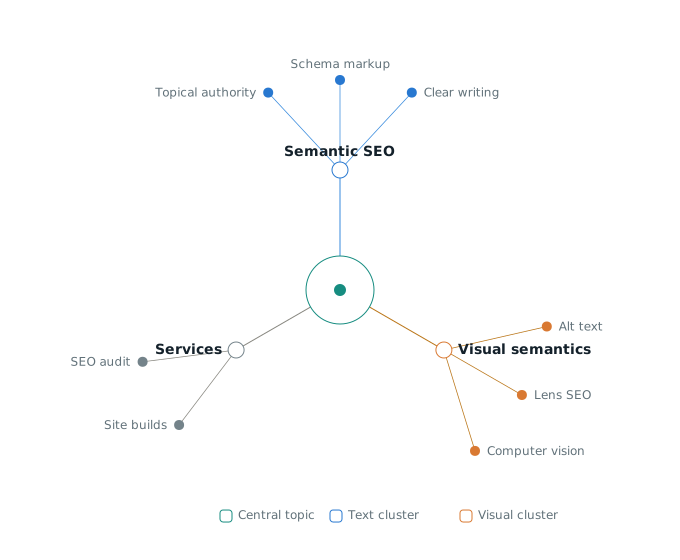
Topical graph: the central topic, three clusters and nine subtopics.
Findings per URLA specific page and a specific problem, not general advice.
A source with every figurePeriod, tool and data owner accompany every measurement.
No promise of positionWe also write what is not being claimed, because that can be checked.
Services and pricing
Three levels. No hidden costs.
€0
Free assessment
Send a URL, the business goal and your single most important page. You get an assessment of the problem, the scope of work and a rough price — before any engagement.
A reply arrives by email within a few working days.
How does content become a source for an AI answer?
A site does not become citable by adding special “AI texts”. What is needed is technical availability, clearly defined entities, direct answers, verifiable claims and a structure a system can reliably extract information from.
The taxi.co.rs case study separates publicly verifiable architecture from data supplied by the project owner. No result is attributed to a single schema change.
Evidence for the taxi.co.rs project
Metric
Value
Evidence type
Note
City hubs
23
Public
Visible in the site navigation; checked 15 August 2026.
Clicks
4,139
Owner data (GSC)
12 June – 14 August 2026, alongside 182,041 impressions.
AI impressions
26,512
Owner data (GSC)
14.6% of all impressions; not independently verified.
Fare pages
National + local
Public
Fares kept separate per city; checked 15 August 2026.
A URL, the business goal, your single most important page and how you currently measure success. Passwords and account access are not needed.
Do you need GA4 and Search Console access straight away?
Not for the free assessment. Access matters later, when a baseline period has to be set, performance analysed or the effect of an implementation verified.
Does delivery include implementation or only recommendations?
Both models are possible: finished content and code, or a precise backlog for your existing team. Scope is defined only after reviewing the site and its constraints.
How quickly does an SEO change produce results?
There is no responsible universal timeframe. It depends on the size of the change, the state of the site, competition, re-indexing and a measurement period long enough to draw a conclusion.
Need a map, an audit or a complete site?
The first step is a free assessment. No obligation, no account access and no sales pressure.